Connecting the Disconnects
By working together, we can keep moving this organization and our profession forward.
By Mark W. Wolfgram, CPA | Spring 2026
Two quotes from former Illinois CPA Society (ICPAS) leaders, Todd
Shapiro and Mary Fuller, resonate deeply with me: “The rate of
change is never going to be slower than it is today.” “The future of
the profession is people.”
One of the greatest benefits of serving as a volunteer leader
within ICPAS is the opportunity to learn from the thought leaders
and respected professionals this organization attracts into its
ranks. And while I’ve heard these quotes many times during my
tenure as an ICPAS member, volunteer, and board director, they
continue to ring true now more than ever. Our profession faces
ever-growing change driven by artificial intelligence (AI), workforce
shifts, regulatory actions, politics, burnout, and more.
Change brings challenges. But as certified public accountants
(CPAs), I like to think we’re pretty smart, creative in our own ways,
adaptable, and definitely not dull. (I may have started a Facebook
group called “Accountants Aren’t Lame” back in college!) We can
handle change and help our clients, customers, and organizations
do the same.
However, the demographics of the CPA profession are creating
a different challenge. The dual issues of aging CPAs retiring and
fewer accounting graduates and young professionals pursuing the
CPA credential threaten to make our jobs more difficult, to say the
least. After all, the future of the profession is people—regardless of
how potent AI proves to be.
Thanks to our efforts working with our elected officials in
Springfield, new pathways to CPA licensure in Illinois can be
utilized starting in 2027; it’s a positive step toward growing the
CPA pipeline, but bringing more CPAs into the profession is really
just the beginning—retaining them is equally critical. (I suggest
reading the 2023 Insight Special Feature, “Righting Retention,” if
you haven’t already.) Point being, if we continue to lose CPAs at
all stages of their careers, we’ll still end up right back where we
started regardless of how many pathways to licensure we have. So
how do we provide our people with experiences that keep them in
the profession long after we’re gone?
It depends. (Very specific advice, Mark. I’m sure a future ICPAS
chairperson will put that quote in their letter.)
While there’s no single solution, I believe it’s up to all of us who lead
others to foster positive experiences that make our profession worth
staying in. The ways we identified and developed talent five, 10, and
15 years ago don’t suit everyone today. More than ever, we must try
to understand each of our people instead of viewing them all as just
some homogeneous human capital source ready to be deployed.
Just consider ICPAS’ findings reported in the 2025 Insight Special
Feature, “The Readiness Divide: How Next-Gen Accounting Talent
Measures Up.” I was shocked to learn early careerists overestimate
their readiness, while managers say their expectations of early
careerists often go unmet. Shocked! OK, I wasn’t actually shocked.
I’ve heard about how “kids these days” don’t know anything and
don’t want to work hard since I was one of those “kids these days.”
But the results made it clear to me that we need to “connect
the disconnect” to ensure we retain and advance our people in
their careers so they can fill the big shoes retiring professionals
are leaving behind.
Leaders, ask your people this: What motivates you?
Is it money? The ability to drive the soccer team carpool?
Making partner? Unlimited cheese from the office refrigerator?
Volunteerism? Don’t assume. Actually ask. Understanding these
drivers is the first step in connecting the disconnects. We can then
help our people work toward those goals and extend them the
experiences that keep them in the profession.
Admittedly, this is work many of us aren’t used to, but it’s necessary
to keep people at the center of the profession.
Young professionals also have a responsibility to connect the
disconnect. Hard work, learning from mistakes, critical thinking, and
being a positive team member remain essential. Early careerists
should seek feedback, identify their professional interests, and
share those interests to connect with mentors and managers.
My goal as this year’s chairperson is to help highlight the issues our
profession faces and to work toward connecting the disconnects,
and I invite all of you, from current leaders to the student members
that are our future leaders, to join me in working together to move
our profession in a direction where people never want to leave it.
I look forward to working together to keep moving this organization
and our great profession forward in these strange times we live in.
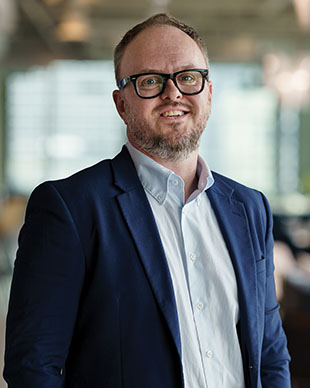
Mark W. Wolfgram, CPA, is the chairperson of the Illinois CPA Society and tax director at Bel Brands USA Inc.