GEN NEXT: Freddy Thomas, CPA
This young professional shares why their tax career is defined by the meaningful relationships they’ve fostered instead of the returns prepared or advice given.
By Freddy Thomas, CPA | Spring 2026
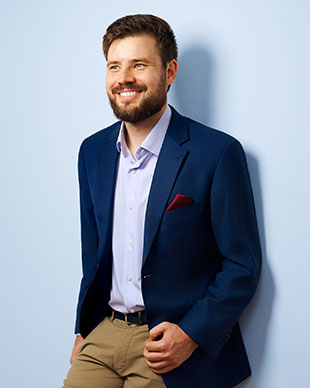
When I started in the tax department of Plante Moran in fall
2018, I imagined a traditional path: busy seasons in the
office, steady in-person collaboration, and a clear sense
of professional identity. What I got was … not that. Instead, I found
a field reshaped by global disruption.
The obvious trigger for this was the COVID-19 pandemic, which
overturned the norms I thought were permanent. Our physical
offices shut down, and what began as a temporary remote-work
solution evolved into a “new normal” hybrid work model.
While this flexibility benefited me, and many certified public
accountants (CPAs), it also introduced challenges that young
professionals like me didn’t anticipate. Isolation made it harder to
learn organically from others. The sudden lack of structure blurred
boundaries between our identities inside and outside of work. The
mental health struggles that followed raised deeper questions
about purpose and direction: Am I doing the right things with my
life? Is this the place where I want to be?
Rising trends, like “quiet quitting,” show a generation reflecting
on those questions and trying to redefine how work fits into their
lives. The traditional public accounting approach maintains that
professional growth requires significant sacrifice and “pay your
dues” commitments. Younger generations, however, are asking
whether that sacrifice is meaningful or even necessary. This trend
has long been identified by the Illinois CPA Society through their
numerous Insight Special Features, highlighting its impact on talent
retention and the pipeline of CPAs entering the profession.
As young staff keep moving the profession toward a work style
that’s further away from the traditional public accounting standard,
meaningful dialogue needs to move with it and be more intentional,
which has left the profession searching for solutions. From my
experience, one solution stands out: overemphasize relationships
and lean into the people around you.
Public accounting is uniquely positioned to capitalize on this
solution—it brings together large cohorts of bright and driven
people. New hires are typically organized into start classes, which
act as support systems for their members. These relationships
transform the nature of work—they create belonging, camaraderie,
shared accomplishments, and a sense of purpose far deeper
than ticking and tying or preparing returns. They turn moments of
esoteric discussions of the Internal Revenue Code into fun times
bantering about shared hobbies and experiences. Over time, these
moments turn into real friendship. For example, one member of my
start class cohort is my weekend running partner. Another is my
go-to for reading recommendations, and another is the person I
call when I need to be humbled at the bowling alley.
So, my advice is this: Build friendships, seek out mentors, ask
questions, share your struggles, find common interests, and
celebrate wins together, especially during busy season when the
workload feels overwhelming. When one invests in relationships,
public accounting becomes more than just technical work—it
becomes meaningful work.
Freddy Thomas, CPA, is a tax manager at Plante Moran and serves as a Young Professional Ambassador for the Illinois CPA Society.